.png)


Composite Decking Pros and Cons for Morris County NJ

If you are comparing deck materials for your backyard, understanding the real composite decking pros and cons can help you make a smarter long-term decision for your family.
Composite decking has become one of the most popular choices for Morris County homeowners because it is low-maintenance, resistant to rot, and safer for kids and pets than aging wood decks. But like any outdoor material, it also comes with tradeoffs.
Some families love the splinter-free surface and easier upkeep. Others are surprised by the higher upfront cost or how hot some boards can feel during summer afternoons.
In Morris County, NJ, decks also deal with changing seasons, humidity, pollen, rain, algae buildup, and freeze-thaw cycles. Those local conditions can affect how composite decking looks, feels, and performs over time.
In this guide, we’ll break down the pros, drawbacks, maintenance needs, safety concerns, and cleaning considerations so you can decide whether composite decking is the right fit for your home, your kids, and your pets.
What Is Composite Decking?
Composite decking is a manufactured decking material made from a blend of wood fibers and recycled plastics.
Many newer products also include a protective outer shell called a cap layer that helps resist fading, stains, scratches, and moisture.
Unlike traditional wood decking, composite boards are designed to require less maintenance over time. This is one reason many homeowners comparing wood vs composite decking choose composite for busy family spaces.
Most homeowners choose composite decking because it:
Does not splinter easily
Resists insect damage
Holds up better against moisture
Does not require regular staining or sealing
Comes in many colors and textures
Many modern composite products are also made using recycled materials, which appeals to homeowners looking for lower-maintenance and more environmentally conscious options.
According to market research from Grand View Research, demand for composite decking continues to grow as homeowners prioritize durability and lower maintenance in outdoor living spaces.
Why More Morris County Families Are Choosing Composite Decking
We’ve seen many homeowners across Morris County move toward composite decking because outdoor spaces are being used more like extensions of the home.
Families want:
Safer play areas for children
Comfortable outdoor entertaining spaces
Less seasonal maintenance
Decks that hold up better against New Jersey weather
That matters in this area because decks in Morris County deal with:
Humid summers
Heavy rain
Tree debris and pollen
Snow and ice
Freeze-thaw cycles
Algae growth in shaded areas
Traditional wood decks can wear down faster when moisture sits on the surface for long periods. Composite decking is designed to resist many of those issues better than untreated or poorly maintained wood.
For busy families, that lower-maintenance appeal is often one of the biggest deciding factors.
Composite Decking Pros and Cons for Families With Kids and Pets
Before choosing a deck material, it helps to look at the advantages and drawbacks side by side.
Pros | Cons |
Splinter-resistant surface | Higher upfront cost |
Lower maintenance | Can get hot in direct sun |
Resistant to rot and insects | Scratches can still happen |
Long lifespan | Some products look less natural than wood |
Easier cleaning | Algae buildup can still create slippery areas |
Many color options | Damaged boards may be harder to match later |
The right choice depends on how your family uses the space and how much maintenance you want to handle over time.
The Biggest Benefits of Composite Decking
Safer Surface for Kids and Pets
One of the biggest reasons families choose composite decking is the smoother surface. Older wood decks can develop:
Splinters
Cracks
Raised nails
Soft spots
Warped boards
Those problems become more noticeable as decks age. Composite decking reduces many of those concerns, making it more comfortable for everyday family use.
The smoother surface is easier on bare feet, safer for toddlers playing outside, and more comfortable for pets walking or lying on the deck.
It also creates a cleaner and more inviting space for outdoor dining and entertaining. When your backyard becomes a regular gathering place for your family, that added comfort can make a big difference.
Lower Maintenance Compared to Wood
Traditional wood decks usually require:
Sanding
Staining
Sealing
Frequent inspections
More aggressive maintenance over time
Composite decking removes much of that ongoing work. Most homeowners simply need routine cleaning and seasonal maintenance to keep the surface looking good.
Compared to ongoing wood deck maintenance, composite decking is often easier for busy homeowners to manage throughout the year.
Most homeowners simply need routine cleaning and seasonal maintenance to keep the surface looking good.
That is a major advantage for busy homeowners who do not want to spend every spring or summer weekend maintaining their deck.
Better Resistance to Moisture and Rot
Moisture is one of the biggest problems for outdoor wood surfaces in New Jersey.
Shaded backyards in Morris County often experience:
Algae buildup
Mold growth
Moisture retention
Slippery surfaces
Composite decking is designed to resist moisture absorption better than traditional wood. That does not mean it is maintenance-free, but it usually holds up better against long-term water exposure.
The Downsides Families Should Know Before Installing Composite Decking
Composite Decking Can Get Hot in Summer
Darker composite boards tend to absorb more heat when exposed to direct sunlight.
During hot summer afternoons, the surface can become uncomfortable for bare feet, children playing outside, and dogs or other pets spending time on the deck.
In many cases, lighter-colored composite boards stay cooler than darker options, which is something families often consider when choosing decking materials for outdoor spaces that get a lot of sun.
Homeowners can also reduce heat by adding:
Pergolas
Shade sails
Outdoor rugs
Umbrellas
Trees or landscaping
This is especially important for families planning to use the deck heavily during summer months.
Composite Decks Can Still Become Slippery
Some homeowners assume composite decking completely eliminates slippery conditions.
That is not always true.
While composite boards resist rot better than traditional wood, they can still collect algae, pollen, mildew, dirt, and wet leaves over time.
In many shaded Morris County backyards, that buildup can make the surface slippery, especially after rain or during humid weather.
Regular cleaning is important for maintaining traction and keeping the deck safer for kids, guests, and pets.
If your deck feels slick or develops visible algae buildup, scheduling a professional deck cleaning can help restore the surface safely without damaging the material.
Higher Upfront Cost
Composite decking usually costs more upfront than pressure-treated wood.
According to the 2025 Cost vs. Value Report, the average composite deck addition project cost exceeded $25,000 nationally. That higher initial investment causes some homeowners to hesitate.
However, many families also consider the long-term savings that composite decking can provide over time. Because it typically requires less staining, sealing, and ongoing maintenance than wood, homeowners often spend less on upkeep throughout the life of the deck.
Composite decking also tends to last longer and may require fewer repairs as the years go on. For homeowners planning to stay in their home long-term, those savings can help balance out the higher upfront installation cost.
Composite Decking vs Wood Decking in Morris County NJ
Choosing between composite and wood depends on your priorities.
Here’s how they compare in real-world use.
Feature | Composite Decking | Wood Decking |
Maintenance | Lower | Higher |
Splinters | Less likely | Common over time |
Rot Resistance | Better | Lower |
Heat Retention | Higher in direct sun | Usually cooler |
Natural Appearance | Manufactured wood look | Real wood grain |
Lifespan | Longer with maintenance | Depends heavily on upkeep |
Wood decking still appeals to homeowners who prefer a natural appearance and lower upfront installation costs.
But for many families with children and pets, composite decking offers a more practical balance between durability and maintenance.
Is Composite Decking Safe for Kids and Pets?
In most cases, yes. Composite decking is generally considered safer than older or poorly maintained wood decks because it is less likely to splinter or crack.
But safety still depends on proper maintenance.
We always recommend homeowners inspect the deck seasonally for loose fasteners, drainage issues, and slippery buildup. Following a regular deck safety checklist can help identify small problems before they become larger safety concerns.
Keep the surface clean
Address slippery buildup early
Check railings and stairs regularly
Inspect for loose fasteners
Monitor shaded areas for algae growth
It is also smart to test the deck surface during hot weather before allowing pets or small children to walk barefoot on darker boards.
No decking material is completely maintenance-free. Even composite decking performs best when cleaned and maintained consistently.
How to Maintain Composite Decking in Morris County?
Composite decking requires less upkeep than wood, but regular maintenance is still important, especially in Morris County’s changing weather conditions.
Rain, humidity, pollen, snow, and shaded backyards can all lead to dirt, algae, and mildew buildup over time.
To keep the deck in good condition, sweep away leaves and debris regularly and clean spills before they stain the surface. Shaded areas should be cleaned more often since moisture tends to stay longer and can create slippery spots.
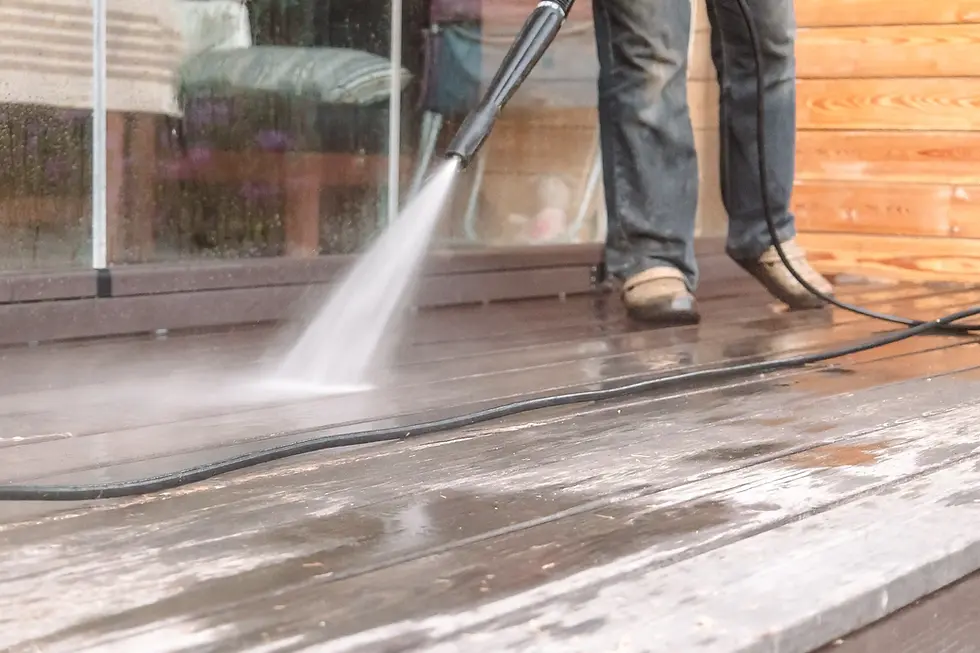
Use gentle cleaners and avoid excessive pressure washing, as too much pressure can damage the protective surface of composite boards.
It is also a good idea to inspect the deck seasonally for loose fasteners, drainage issues, or areas where buildup collects frequently.
For decks with heavy staining, algae growth, or slippery surfaces, professional deck cleaning services can help restore the appearance safely without damaging the material.
Common Composite Deck Cleaning Mistakes
We often see homeowners accidentally damage composite decking by treating it like concrete or traditional wood.
Common mistakes include:
Using excessive pressure
Scrubbing with metal brushes
Letting leaves sit too long
Ignoring algae growth
Using bleach-heavy cleaners incorrectly
These mistakes can dull the surface, create uneven wear, or shorten the life of the deck. Following manufacturer cleaning recommendations is always important.
When Composite Decking Is Worth the Investment?
Composite decking is often worth the investment for homeowners who want a lower-maintenance and longer-lasting outdoor space.
Although it typically costs more upfront than wood, many families choose it because it requires less staining, sealing, and repair work over time.
It can be especially beneficial for Morris County homes with kids, pets, shaded backyards, or frequent outdoor use. For homeowners planning to stay in their home long-term, the durability and reduced upkeep may provide better overall value.
When to Call a Professional for Deck Cleaning?
Even durable composite decking eventually needs professional attention.
You should consider professional deck cleaning when:
The surface feels slippery
Algae keeps returning
Stains will not come out
Dirt buildup becomes noticeable
You are unsure how much pressure is safe
Your deck has not been cleaned in years
Professional cleaning can help restore appearance while reducing the risk of damaging the boards.
At Burrini's Power Washing, we use controlled cleaning methods designed for delicate exterior surfaces, including composite decking throughout Morris County, NJ.
Protect Your Composite Deck for the Long Run
Composite decking can be a great long-term option for Morris County families who want a cleaner, lower-maintenance outdoor space for kids, pets, and everyday use.
Keeping the surface properly maintained helps preserve its appearance and reduce slippery buildup over time.
At Burrini's Power Washing, we provide professional deck cleaning services throughout Morris County using safe, low-pressure methods for composite surfaces.
Schedule a professional deck cleaning with Burrini’s Power Washing to keep your outdoor space clean, safe, and ready to enjoy.
Frequently Asked Questions
Does composite decking fade over time?
Most modern composite decking is designed to resist fading better than older products, especially capped composite boards. However, some gradual color fading can still happen over time with constant sun exposure.
Can outdoor furniture scratch composite decking?
Yes, heavy patio furniture or dragging sharp objects across the surface can leave scratches. Using furniture pads and lifting items instead of dragging them can help protect the deck.
How often should composite decking be professionally cleaned?
For most Morris County homes, professional cleaning every 1–2 years helps remove algae, pollen, dirt, and buildup that regular rinsing may not fully remove. Shaded or heavily used decks may need cleaning more often.
Does composite decking attract mold or mildew?
Composite decking resists moisture better than wood, but mold and mildew can still grow on surface debris like leaves, dirt, and pollen if the deck is not cleaned regularly.
Can composite decking increase home value?
A well-maintained composite deck can improve curb appeal and outdoor living space, which may make a home more attractive to future buyers.


Comments