


Soft Wash vs Pressure Wash: Which Cleaning Method Is Best for Your Property?
- Jun 21
- 6 min read
When your home’s exterior starts looking dirty, stained, or covered in algae, mold, or mildew, one question usually comes up:
Should we soft wash it or pressure wash it?
At first glance, both methods seem similar. They both clean your property and remove unwanted buildup. But the way they work — and the surfaces they are best suited for — are very different.
Choosing the wrong cleaning method can lead to more than just a disappointing result. Too much pressure on the wrong surface can cause damage, while using the wrong cleaning approach may only remove the surface dirt without solving the real problem.
At Burrini Power Washing, we understand that exterior cleaning is not just about making a property look better. It is about protecting your investment, extending the life of your surfaces, and using the safest method for each situation.
In this guide, we’ll explain the difference between soft washing and pressure washing, when to use each method, the pros and cons, and how to decide what is best for your property.
Soft Wash vs Pressure Wash: Quick Answer

Soft Wash vs Pressure Wash: Quick Answer
The main difference comes down to how the cleaning is done.
Pressure washing uses high-pressure water to remove dirt, stains, and buildup from strong surfaces.
Soft washing uses low pressure combined with specialized cleaning solutions to break down and remove organic growth like algae, mold, and mildew.
A simple way to think about it:
Pressure washing = power and force
Soft washing = treatment and protection
Neither method is better in every situation. The right choice depends on the surface you are cleaning and the type of problem you are trying to solve.
What Is Pressure Washing?

Pressure washing is a cleaning method that uses highly pressurized water to remove dirt, grime, stains, and debris from surfaces.
The equipment pushes water through a small nozzle at high speed, creating enough force to remove buildup that normal washing cannot handle.
This makes pressure washing extremely effective for durable surfaces.
Common Areas We Pressure Wash
Pressure washing is often used for:
Concrete driveways
Sidewalks
Brick surfaces
Garage floors
Parking areas
Outdoor steps
These surfaces are strong enough to handle higher water pressure without being damaged.
For example, a concrete driveway can collect years of dirt, oil stains, tire marks, and weather buildup. A professional pressure washing service can restore its appearance much faster than traditional cleaning methods.
Benefits of Pressure Washing
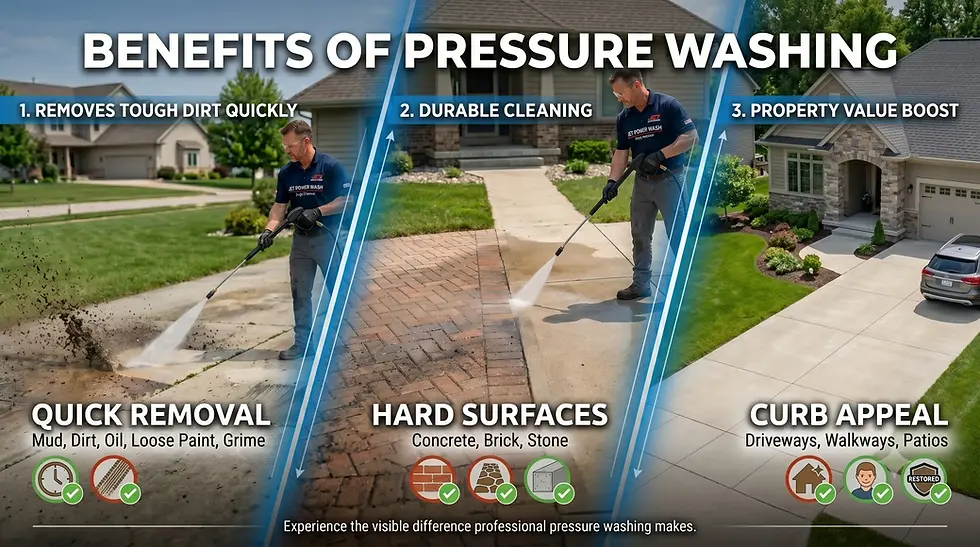
1. Removes Tough Dirt Quickly
One of the biggest advantages of pressure washing is speed.
High-pressure water can remove:
Mud
Dirt buildup
Oil stains
Loose paint
Surface grime
This makes it ideal for areas that need a deeper physical cleaning.
2. Great for Hard Surfaces
Concrete, brick, and stone can usually handle stronger cleaning methods.
Pressure washing helps restore these surfaces without needing aggressive scrubbing.
3. Improves Curb Appeal
A clean driveway, walkway, or patio can immediately improve how a property looks.
Many homeowners underestimate how much exterior surfaces impact the overall appearance of their home.
What Is Soft Washing?
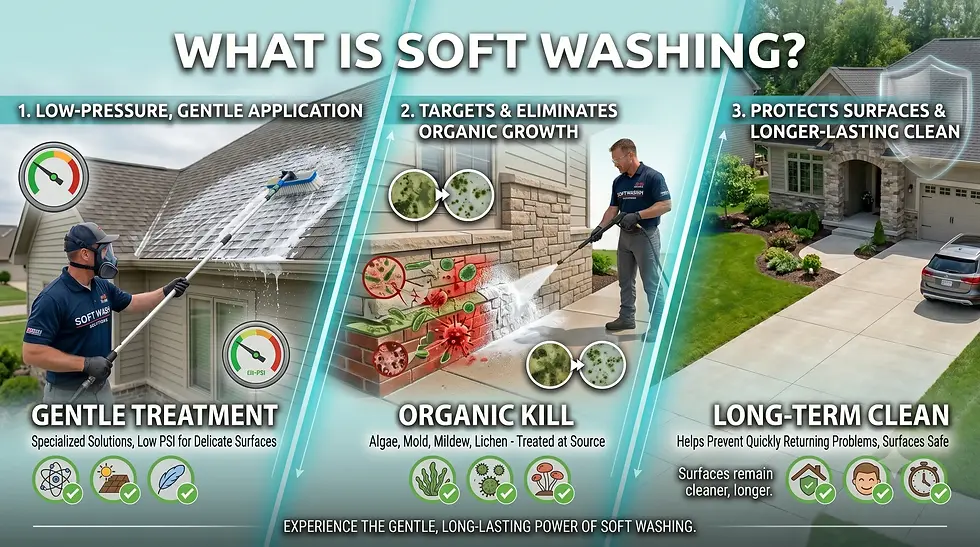
Soft washing is a lower-pressure cleaning method that uses specially designed solutions to remove contaminants.
Instead of relying mainly on force, soft washing targets the source of the problem.
This is especially important for organic growth.
Things like algae, mold, and mildew are living organisms. Simply blasting them away with pressure may remove what you see, but it may not eliminate the cause.
Soft washing treats the surface and helps prevent the problem from quickly returning.
How Soft Washing Works

The soft washing process usually includes:
Applying a cleaning solution to the surface
Allowing the solution time to break down contaminants
Gently rinsing away the buildup
Because it uses lower pressure, it is much safer for delicate materials.
Common Areas We Soft Wash

Soft washing is commonly used for:
Vinyl siding
Stucco
Painted surfaces
Wood siding
Exterior walls
Delicate building materials
A roof is a great example.
Many roofing materials are not designed to handle aggressive pressure. High-pressure cleaning can damage shingles and shorten their lifespan.
That is why soft washing is often the preferred approach for roof cleaning.
Benefits of Soft Washing

1. Removes Mold and Algae at the Source
One of the biggest advantages of soft washing is that it does more than remove the visible dirt.
It helps address:
Organic growth
Algae stains
Mold
Mildew
This leads to longer-lasting results.
2. Safer for Delicate Surfaces
Many exterior surfaces can be damaged by excessive pressure.
Soft washing reduces the risk of:
Cracked siding
Damaged paint
Broken seals
Surface erosion
The goal is not just to clean the property today. It is to protect it for the future.
Soft Washing vs Pressure Washing: Key Differences

Cleaning Method
The biggest difference is how each method removes dirt.
Pressure washing relies mainly on water force.
Soft washing relies on cleaning solutions that break down contaminants.
Water Pressure
Pressure washing uses significantly higher pressure.
Soft washing uses much lower pressure.
The exact pressure depends on the equipment and service provider, but the difference is significant.
Best Use Cases
Pressure washing works best when you need to remove heavy surface buildup.
Soft washing works best when you need to safely clean and treat sensitive surfaces.
Soft Wash vs Pressure Wash: Which One Should You Choose?

The best method depends on what you are cleaning.
Choose Soft Washing If You Need To Clean:
Roofs
Roof shingles are designed to protect your home, not withstand aggressive pressure.
Soft washing helps remove:
Black streaks
Algae
Moss
Organic buildup
without risking unnecessary damage.
House Siding
Vinyl siding can collect dirt, mildew, and algae.
Soft washing allows homeowners to clean their siding without forcing water behind the panels.
Stucco or Painted Surfaces
These materials can be more sensitive.
Using too much pressure may cause damage or remove finishes.
Choose Pressure Washing For:
Driveways
Concrete surfaces benefit from the power of pressure washing.
It helps remove:
Oil stains
Dirt
Tire marks
Weather buildup
Patios and Walkways
Outdoor areas collect a lot of debris over time.
Pressure washing can restore their original appearance.
Can Pressure Washing Damage Your Property?

Yes, if it is done incorrectly.
Pressure washing is powerful, and that power needs to be controlled.
Common mistakes include:
Using too much pressure
Holding the nozzle too close
Cleaning the wrong surface
Using incorrect techniques
Potential damage can include:
Damaged siding
Stripped paint
Broken seals
Surface marks
This is why professional experience matters.
Can Soft Washing Damage Your Property?

Soft washing is safer, but it still requires proper knowledge.
Incorrect chemical use can:
Harm plants
Damage surfaces
Leave residue
A professional soft washing company understands how to apply solutions correctly and protect surrounding areas.
Soft Washing vs Pressure Washing Cost: Which Is More Affordable?

Pricing depends on several factors:
Property size
Surface condition
Accessibility
Type of cleaning required
Pressure washing may sometimes cost less because it requires fewer specialized solutions.
However, soft washing can provide longer-lasting results because it treats the underlying problem.
The cheapest option is not always the best value.
A proper cleaning method can help prevent expensive repairs later.
How Often Should You Soft Wash or Pressure Wash Your Property?

There is no single schedule for every property.
Factors include:
Climate
Shade
Moisture levels
Nearby trees
Surface material
General recommendations:
Area | Recommended Cleaning Frequency |
House exterior | Every 1–2 years |
Roof | Every few years as needed |
Driveway | Annually or when buildup appears |
Patio | Based on usage |
Regular maintenance usually costs less than waiting until buildup becomes severe.
Common Mistakes Homeowners Make When Cleaning Their Property

Using Pressure Washing Everywhere
Not every surface can handle high pressure.
A driveway and a roof require completely different approaches.
Treating Only the Appearance
Removing stains is good, but understanding what caused them matters.
Algae and mold often return when they are not properly treated.
Choosing Based Only on Price
A cheaper cleaning method that damages your property can become expensive quickly.
The right approach balances:
Safety
Effectiveness
Long-term results
Soft Wash vs Pressure Wash: Final Verdict

So, which one is better?
The answer depends on your property.
Pressure washing is the better choice for strong surfaces like concrete, patios, and driveways where you need powerful cleaning.
Soft washing is the better choice for delicate surfaces like roofs, siding, and areas affected by algae, mold, and mildew.
The goal is not simply to remove dirt.
The goal is to clean your property safely while protecting its value.
At Burrini Power Washing, we focus on choosing the right cleaning method for each surface instead of using a one-size-fits-all approach. Whether your property needs soft washing, pressure washing, or a combination of both, our goal is to deliver reliable exterior cleaning results that improve appearance and help protect your investment.
Frequently Asked Questions
Is soft washing better than pressure washing?
Soft washing is better for delicate surfaces and organic growth removal, while pressure washing is better for durable surfaces with heavy dirt buildup.
Can you pressure wash a roof?
Pressure washing a roof is generally not recommended because high pressure can damage roofing materials.
How long does soft washing last?
Soft washing results often last longer because it helps remove the source of organic growth instead of only removing surface buildup.
Is pressure washing safe for siding?
It can be safe when performed correctly, but excessive pressure may cause damage.
Does soft washing remove mold permanently?
Soft washing helps eliminate mold and mildew growth, but future growth depends on environmental conditions.
How often should a house be pressure washed?
Most homes benefit from exterior cleaning every 1–2 years, depending on location and buildup.
Which cleaning method is best for a driveway?
Pressure washing is usually the preferred option for concrete driveways because it effectively removes tough stains and dirt.


Comments