


Soft Washing vs Pressure Washing: Which Does Your NJ Home Need?
If you're comparing power washing vs soft washing, the short answer is this: use pressure on hard, flat surfaces like concrete, and use low pressure plus a cleaning solution on anything that can be damaged, including your siding and roof. The two methods are not rivals. They are tools for different surfaces, and the wrong one can cost you far more than the cleaning itself.
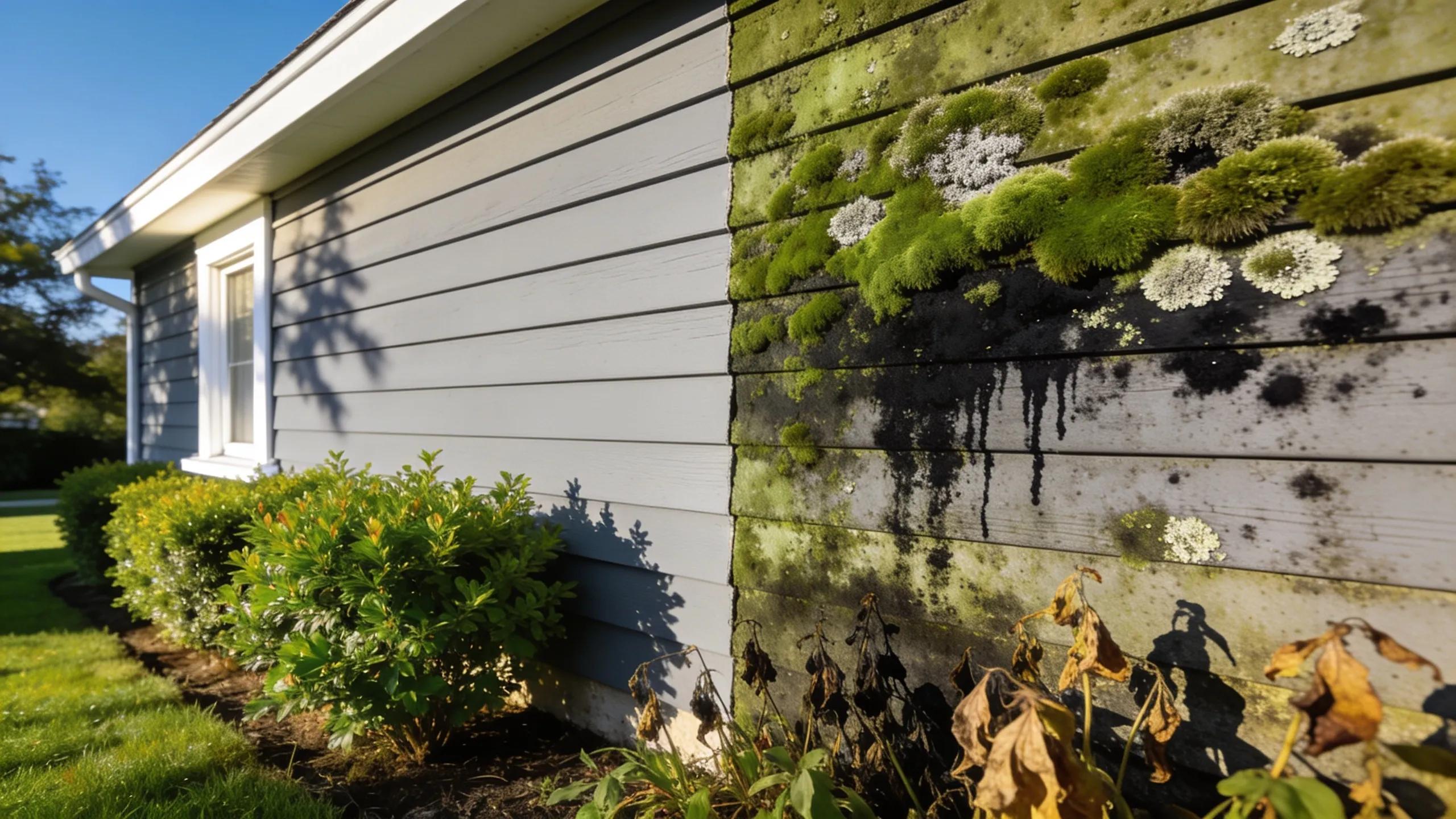
Homeowners across Morris County ask us this every spring and fall. The green film on a north-facing wall and the black streaks on a roof look similar, but the right fix depends on what the surface is made of. This guide explains how each method works, which one suits each part of your house, and what to ask before you hire anyone. For the wider picture of exterior care, see our complete guide to professional exterior cleaning in New Jersey.
Key Takeaways Pressure washing relies on force. Soft washing relies on low pressure and a cleaning solution that does the work the force would otherwise do.Asphalt shingle manufacturers say never to use a pressure washer on a shingle roof (ARMA).Vinyl and fiber cement siding are cleaned with low pressure and soft tools, and manufacturers set their own limits.Concrete driveways, sidewalks and patios are where pressure washing earns its place.Most houses need both methods. Ask a contractor to match the method to each surface.

What Is the Difference Between Power Washing and Pressure Washing?
Most homeowners use the two terms interchangeably, and many contractors do too. Some reserve "power washing" for machines that heat the water, while "pressure washing" usually means unheated water. Either way, the cleaning comes mainly from high-pressure water hitting the surface. We cover the heated-versus-cold distinction in hot vs cold pressure washing.
So when people search for "power washing vs soft washing," the real comparison is force versus chemistry. That is the line this article draws.
What Is Soft Washing?
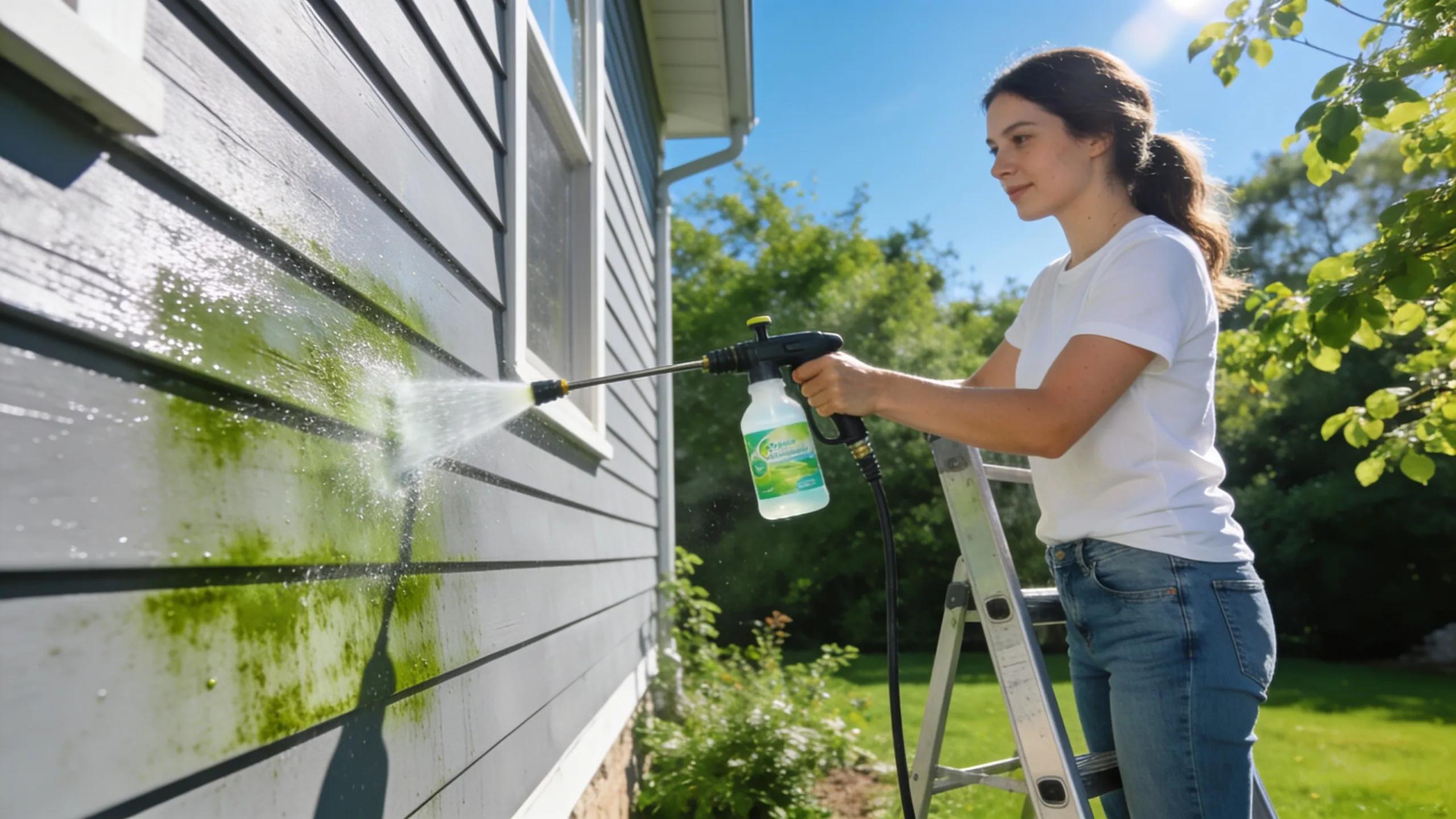
Soft washing is a low-pressure cleaning method. A contractor applies a cleaning solution, lets it break down algae, mold and mildew, and then rinses with gentle water. The power washers' trade group, Power Washers of North America, describes house washing as "a professional, low-pressure method used to clean a home's exterior safely and responsibly" (PWNA, retrieved 2026-10-15).
The roof guidance from the Asphalt Roofing Manufacturers Association (ARMA) shows the same logic in a simple form. It describes spraying a 50:50 mix of laundry-strength liquid chlorine bleach and water, letting it sit for roughly 15 to 20 minutes, and rinsing with low-pressure water (ARMA, retrieved 2026-10-15). Professional soft washing follows the same sequence: apply, wait, rinse. The difference is that a trained contractor chooses the solution for the surface and protects the landscaping around it.
What Chemicals Does Soft Washing Use?
The exact mix depends on the contractor and the surface, and that is a fair question to ask. Roof guidance from ARMA names chlorine bleach and water. Siding guidance is more cautious: the Polymeric Exterior Products Association (PEPA) warns against undiluted chlorine bleach on vinyl siding and suggests mild soap and water for routine cleaning (PEPA, retrieved 2026-10-15). A good contractor will tell you what they use, how it is diluted, and how they protect plants and nearby surfaces.
What Is Pressure Washing, and Where Does It Work Best?
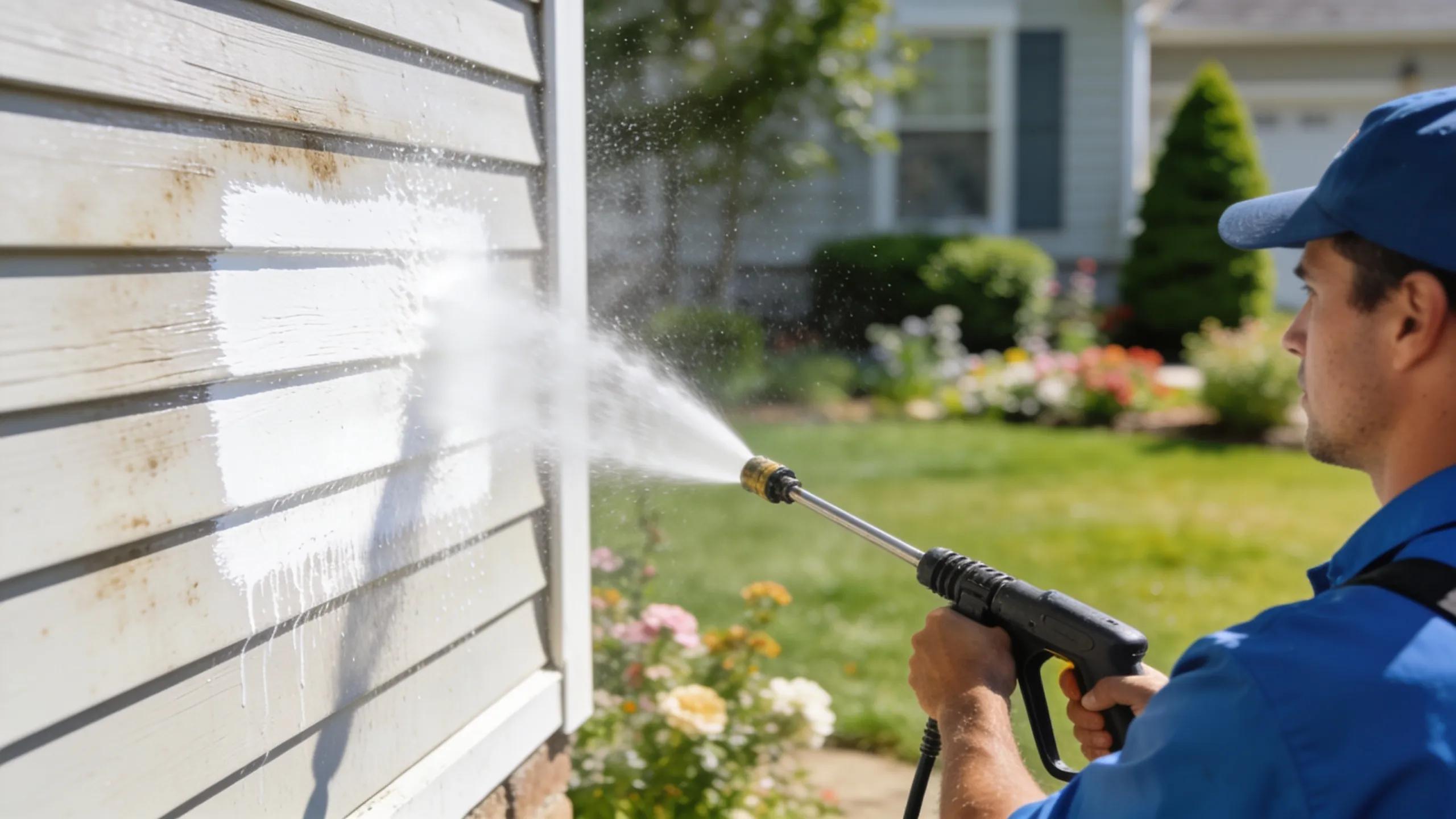
Pressure washing uses a concentrated stream of high-pressure water to blast dirt, oil and stains off a surface. It works well on hard, flat surfaces that can take the force, such as concrete. On our driveway and sidewalk cleaning jobs, that force is exactly what lifts embedded grime. The same goes for many concrete patios and walkways, which is why patio and deck cleaning often combines methods depending on the material.
The risk comes from using that force on surfaces that were never built for it. That is the next section.
Which Method Does Each Part of Your Home Need?
Here is a practical guide. Where a manufacturer or trade group has published guidance, we cite it.
Surface | Better fit | Why |
Asphalt shingle roof | Soft washing only | ARMA: "Never use a pressure washer to clean an asphalt shingle roof." |
Vinyl siding | Low pressure and soft tools | PEPA: don't aim the stream upward, follow the manufacturer's limits |
Fiber cement siding | Low pressure and a soft brush | James Hardie: high-pressure blasting may damage the surface |
Painted wood, stucco | Low pressure; ask your contractor | Delicate finishes that can chip, gouge or let in water |
Concrete driveways, sidewalks | Pressure washing | Hard, flat surface that tolerates force |
Fences, decks | Depends on the material | Wood and composite need different settings |
Soft Washing Vinyl Siding
Vinyl is the most common siding on New Jersey homes, and it is where the pressure-versus-soft question comes up most. The main danger is water getting behind the panels. PEPA says: "Do not aim the stream upward, as this can force water behind the siding panels," and advises reading the manufacturer's instructions for both the siding and the washer, since some manufacturers limit pressure and cleaners (PEPA, retrieved 2026-10-15). It also calls "a soft cloth or a long-handled brush with soft bristles" ideal for cleaning.
If you are dealing with green or black spotting on vinyl, our guide to the best vinyl siding mold cleaner explains what the growth is and how it is removed. If you would rather do it the safe way yourself first, read how to power wash a house safely without damaging the siding.
Soft Washing Fiber Cement Siding
James Hardie's technical bulletin on siding cleaning says a low-pressure water spray with a soft or medium-bristle, non-metal brush is most suitable for fiber cement products. It also warns that "high pressure water blast and sand blasting may damage the surface." The bulletin, published in 2013, says pressures under 1500 psi, wide fan tips and a distance of at least 6 feet from the wall will minimize the chance of damage (James Hardie Technical Bulletin 20, retrieved 2026-10-15). Check your own siding's current instructions, since specifications can change.
Soft Washing a Roof
This is the clearest case of all. ARMA states: "Never use a pressure washer to clean an asphalt shingle roof," warning that it can "cause granule loss and very likely premature failure of the roof system" (ARMA, retrieved 2026-10-15). ARMA's separate bulletin on roof algae adds that you should not use a power washer "or any type of brush or broom" on the roof surface, and that it encourages the use of professionals (ARMA technical bulletin, retrieved 2026-10-15).
That matters in New Jersey. ARMA says algae discoloration is most widespread in the Gulf States and along the Northwest and Eastern Seaboards, usually appearing brown to black and streaky, most visibly on light-colored roofs. The organism ARMA names as probably the most prevalent is Gloeocapsa magma. Those black streaks are common on roofs here, and they are a cleaning job for soft washing, not for a pressure washer. If your roof or siding needs attention, see our roof and siding cleaning page.
Can Pressure Washing Damage Your Siding?
Yes, when the pressure, angle or distance is wrong. The documented risks are water forced behind panels (PEPA) and surface damage to fiber cement (James Hardie). Both come from force that the surface was not designed to handle. Pressure is not always the villain, though. The problem is using one setting for every surface.
How Do You Choose Between Soft Washing and Pressure Washing?
Use these questions to decide.
What is the surface made of? Roofs and siding point to soft washing. Concrete flatwork points to pressure.
What are you removing? Algae, mold and mildew respond to a cleaning solution applied at low pressure. Oil, tire marks and compacted dirt on concrete usually need pressure.
What is next to the surface? Windows, trim, plants and light fixtures all need protection from the wrong method.
Does the manufacturer have limits? Siding and roofing makers publish cleaning guidance. A contractor should know it.
Most homes end up needing both. A typical visit might soft wash the siding and roof, then use pressure on the driveway and walkway.
What Should You Ask a Contractor Before You Hire?
Ask which method they plan to use on each surface and why. Ask what solution they use and how they protect your plants. Ask whether they are insured, and get the price in writing.
Here is what we can say about ourselves. Burrini's Power Washing has served Morris County and surrounding northern New Jersey communities for over 50 years. We carry general liability and workers' comp coverage and are fully insured and bonded. The price we quote is the price you pay, guaranteed in writing, and you don't pay until you're 100% satisfied with the results. Our approach is simple: each surface receives the proper pressure level and cleaning solution. That is exactly what this article is about.
Frequently Asked Questions
Is soft washing safe for vinyl siding?
Low-pressure cleaning with the right solution is the approach siding makers favor, and PEPA recommends soft tools and mild solutions for routine cleaning. Avoid aiming water upward and avoid undiluted chlorine bleach (PEPA).
Can I pressure wash my roof?
No. ARMA says never to use a pressure washer on an asphalt shingle roof because it can cause granule loss and premature failure (ARMA).
Does soft washing use bleach?
Sometimes. It depends on the contractor, the surface and the type of growth. Ask what is being used, how it is diluted and how nearby plants will be protected. Our house washing services page explains how we approach a house wash.
Is soft washing better than pressure washing?
Neither is better overall. Soft washing suits delicate surfaces and organic growth. Pressure washing suits hard, flat surfaces. The right answer depends on the surface in front of you.
Do you only work in Randolph?
No. We list service in Dover, Morristown, Denville, Randolph, Rockaway, Montville, Chatham, Madison, Parsippany, Chester, Mount Olive and Mine Hill, plus the rest of Morris County. See our Morris County power washing page or the service areas for your town, including Morristown, Parsippany, Dover and Rockaway.
The Bottom Line
Soft washing and pressure washing solve different problems. Roofs and siding call for low pressure and the right solution. Concrete calls for pressure. Pick the method by surface, check the manufacturer's guidance, and hire someone who explains their choices.
Not sure which your home needs? Call Burrini's Power Washing at (973) 598-1900 or request a quote. We're at 65 Park Ave, Randolph, NJ 07869, open Monday to Friday 8 AM to 6 PM, Saturday 8 AM to 4 PM and Sunday 9 AM to 12 PM.
Related reading: our residential power washing services and commercial power washing.
Comments