


.png)
House Washing Methods: Choosing the Right Cleaning Approach for Long-Term Home Care
A home's exterior faces constant exposure to the elements. Rain, wind, sunlight, pollen, dirt, mold, algae, and airborne pollutants all gradually accumulate on siding, trim, brick, and other exterior surfaces.
Over time, this buildup can make even a well-maintained home look older than it really is.
Many homeowners assume that all exterior cleaning is essentially the same. In reality, different house washing methods are designed for different surfaces and conditions. Choosing the wrong approach can sometimes lead to unnecessary wear or even damage, while choosing the right method can help protect your home's appearance and longevity.
Understanding how house washing works and why different methods exist can help homeowners make informed decisions about maintaining one of their most valuable investments.
Why House Washing Is More Than a Cosmetic Service

House washing is often associated with curb appeal, and appearance is certainly one of its most noticeable benefits. A clean exterior can make a home look brighter, newer, and more inviting.
However, exterior cleaning goes beyond appearance alone.
Throughout the year, contaminants such as dirt, pollen, mold, mildew, algae, tree sap, and environmental pollutants settle on exterior surfaces. If left untreated, these substances can accumulate and contribute to staining, discoloration, and premature wear.
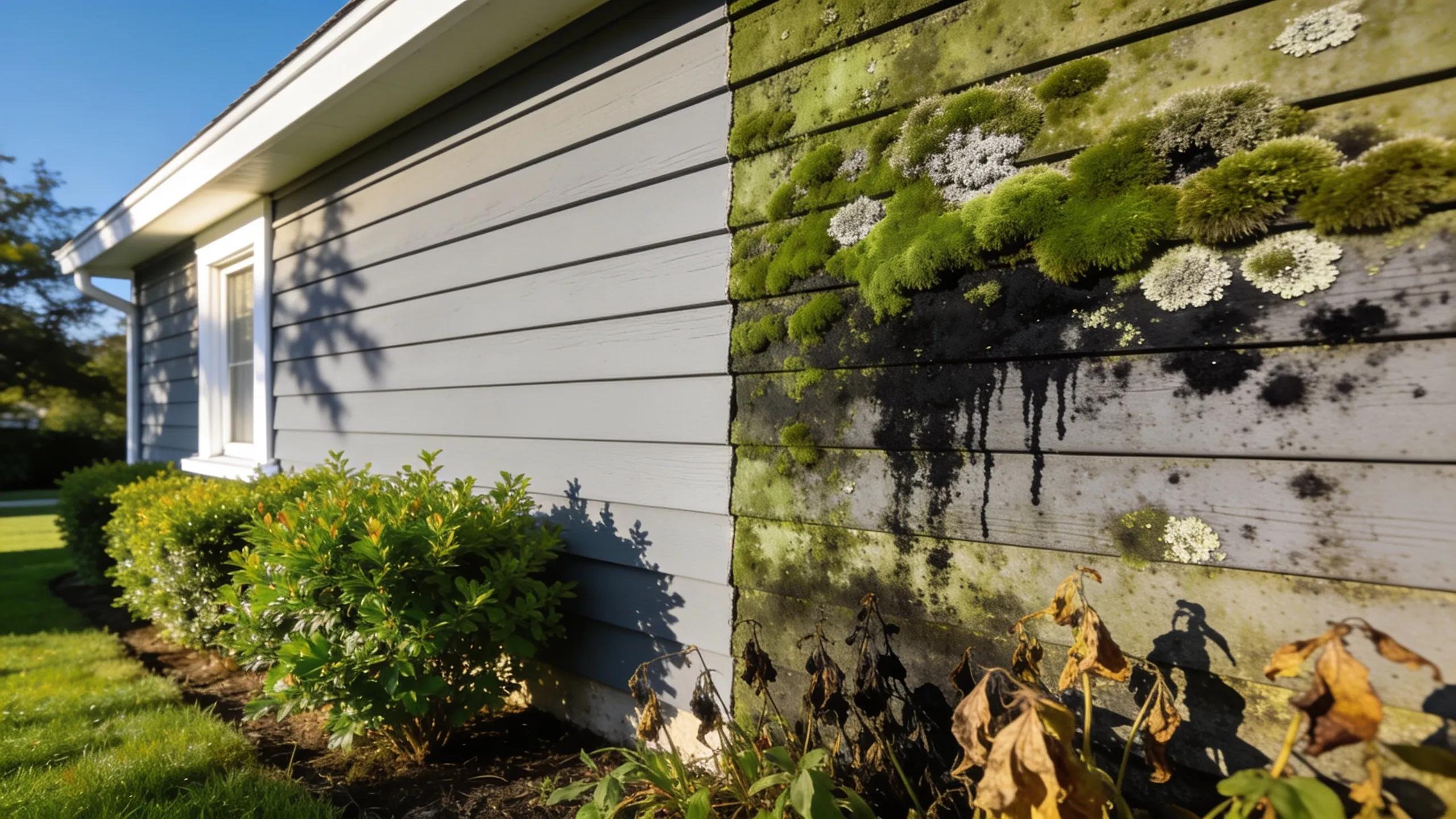
Certain types of biological growth can also thrive in damp and shaded areas. Green algae, black streaks, and mildew commonly develop on siding, roofing materials, and trim. These growths not only affect appearance but may also retain moisture against surfaces for extended periods.
Property appearance can also influence perceived value. According to research from the National Association of Realtors (NAR), curb appeal plays a meaningful role in buyer impressions and overall property marketability. While house washing alone does not increase a home's value, a clean and well-maintained exterior can contribute positively to how a property is viewed.
Regular exterior cleaning is best viewed as part of a larger home maintenance strategy rather than simply a cosmetic improvement.
Understanding the Most Common House Washing Methods

One of the biggest misconceptions about exterior cleaning is that higher pressure always produces better results.
In reality, the most effective house washing method depends on the material being cleaned and the type of contamination present.
Soft Washing
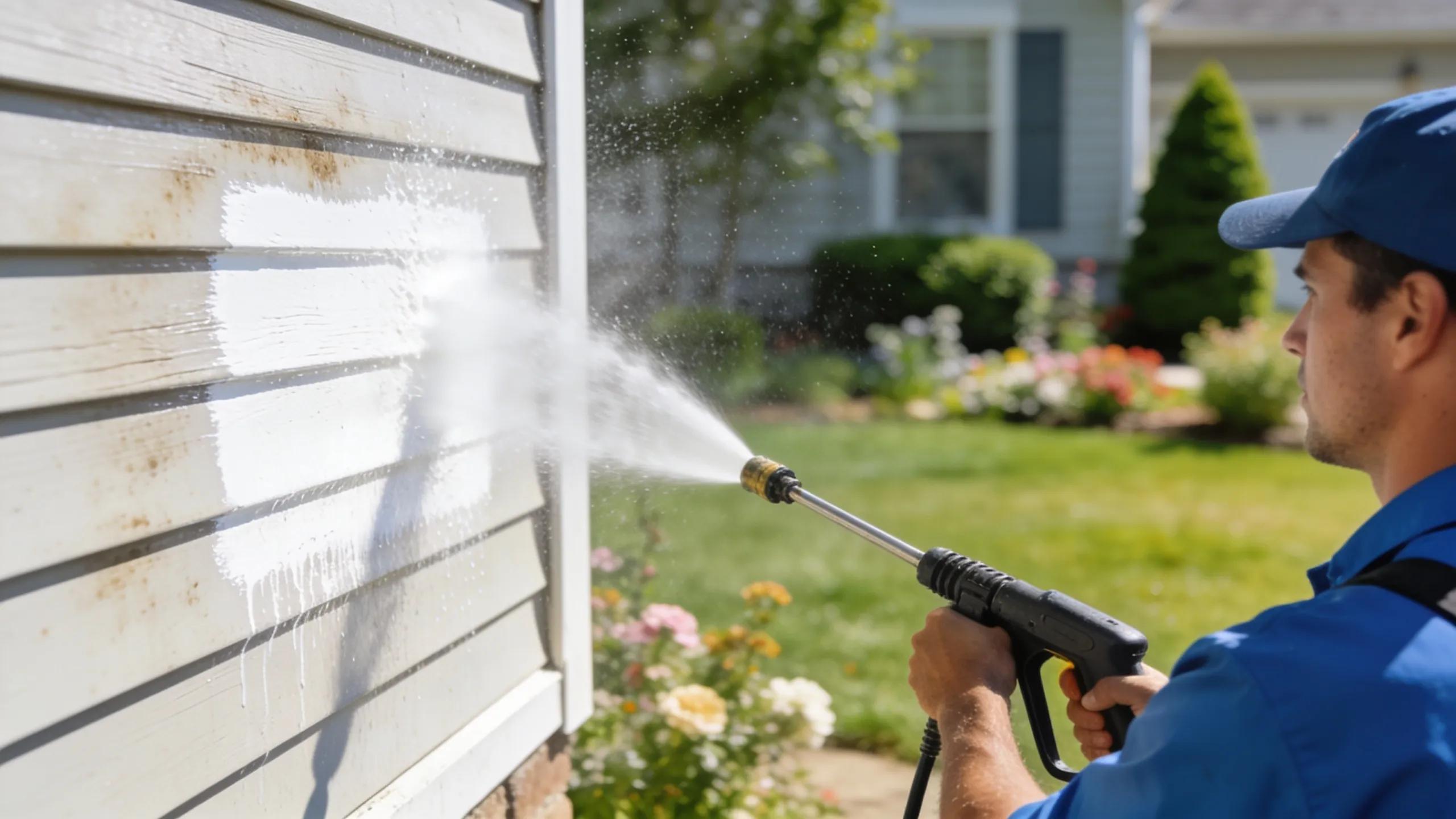
Soft washing is a cleaning method that uses low-pressure water combined with specialized cleaning solutions to remove dirt, mold, mildew, algae, and other organic growth.
Rather than relying on force, soft washing focuses on treating and breaking down contaminants before gently rinsing them away.
This method is commonly used on:
Vinyl siding
Painted surfaces
Stucco
Wood siding
Exterior trim
Because soft washing uses lower pressure, it is often preferred for surfaces that could be damaged by aggressive cleaning methods.
Soft washing can also help address the root cause of certain types of staining by targeting biological growth rather than simply removing surface discoloration.
Pressure Washing
Pressure washing uses higher-pressure water to clean durable exterior surfaces.
This method is often effective for removing dirt, mud, surface stains, and accumulated debris from hard materials.
Common applications include:
Concrete driveways
Sidewalks
Brick surfaces
Stone features
Patios
While pressure washing can be highly effective in the right situations, it is not appropriate for every surface.
Excessive pressure can sometimes damage siding, strip paint, force water behind exterior materials, or create unnecessary wear. This is why professional assessment is important before selecting a cleaning method.
The goal is not simply to clean a surface. The goal is to clean it safely and effectively.
Why Exterior Building Materials Matter
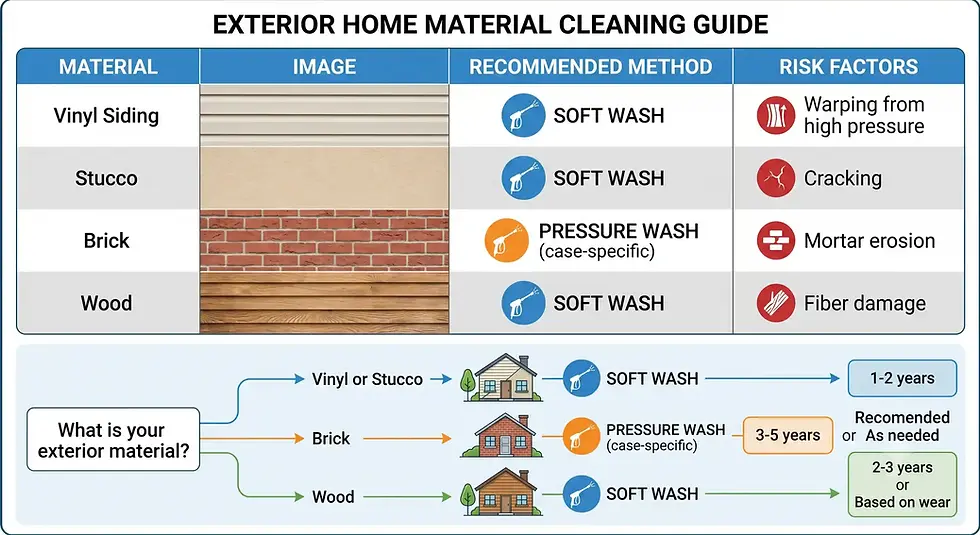
Every home's exterior is unique.
The materials used on a house should play a major role in determining the appropriate cleaning approach.
Vinyl Siding
Vinyl siding is one of the most common residential exterior materials.
Soft washing is often the preferred method because it effectively removes algae, dirt, and mildew without exposing the siding to excessive pressure.
Fiber Cement Siding
Fiber cement products are durable, but they still benefit from careful cleaning.
Using appropriate washing methods helps preserve both appearance and protective finishes.
Stucco
Stucco requires special attention because of its textured surface and moisture-sensitive nature.
Soft washing is frequently recommended to avoid potential cracking or damage.
Brick and Masonry
Brick can often tolerate higher-pressure cleaning when performed properly.
However, factors such as age, mortar condition, and existing wear should always be evaluated first.
Wood Siding
Wood surfaces require a balanced approach.
Excessive pressure can damage wood fibers, while inadequate cleaning may leave contaminants behind.
Selecting the proper method helps preserve both the appearance and lifespan of the material.
The Hidden Problem of Biological Growth on Home Exteriors

Many homeowners assume that all exterior discoloration is simply dirt.
In reality, some of the most common stains are caused by biological growth.
These may include:
Mold
Mildew
Algae
Moss
The U.S. Environmental Protection Agency (EPA) has long emphasized the connection between moisture and microbial growth. Areas that remain damp for extended periods often become ideal environments for these organisms.
Shaded sides of homes are particularly vulnerable.
Trees, landscaping, poor drainage, and humid conditions can all contribute to growth over time.
One reason stains often return after cleaning is that some methods remove only the visible layer without addressing the underlying organisms.
A more comprehensive cleaning approach can help reduce the likelihood of rapid regrowth and provide longer-lasting results.
How Climate and Environment Influence House Washing Needs

Location plays a significant role in exterior maintenance.
A home in a dry climate faces different challenges than a home located in a humid coastal environment.
Humid Regions
Higher moisture levels often create ideal conditions for mold, mildew, and algae growth.
Homeowners in these areas may notice discoloration developing more quickly.
Coastal Areas
Salt exposure can contribute to residue buildup on exterior surfaces.
Regular cleaning helps remove accumulated salt and airborne contaminants.
Heavily Wooded Properties
Homes surrounded by trees often experience increased shade, pollen, leaves, and organic debris.
These conditions can encourage biological growth and staining.
Urban Environments
Airborne pollutants, vehicle emissions, and environmental debris can gradually affect exterior surfaces.
As a result, cleaning needs often vary based on local conditions.
There is no universal cleaning schedule that works for every property. The ideal frequency depends on climate, environment, and the home's exposure to contaminants.
The Long-Term Impact of Ignoring Exterior Cleaning

Exterior contaminants rarely disappear on their own.
Over time, accumulated dirt, algae, mold, and pollutants can contribute to ongoing deterioration of a home's appearance.
Neglecting exterior maintenance may lead to:
Increased staining
More difficult cleaning projects
Moisture retention
Faster surface wear
Reduced curb appeal
Regular cleaning helps prevent contaminants from becoming deeply embedded in exterior materials.
Much like routine maintenance for roofing, gutters, or HVAC systems, exterior washing can be viewed as a preventive measure that helps support long-term property care.
Small maintenance efforts today can often help reduce larger maintenance challenges in the future.
DIY House Washing vs Professional House Washing

Many homeowners consider cleaning their home's exterior themselves.
In some situations, DIY cleaning can be a reasonable option.
However, there are several factors worth considering.
DIY house washing often involves:
Equipment rental
Learning proper techniques
Safety considerations
Time investment
The Consumer Product Safety Commission (CPSC) has reported thousands of pressure washer-related injuries over the years, highlighting the importance of using equipment properly.
Professional house washing services bring experience, specialized equipment, and knowledge of different exterior materials.
They can evaluate surfaces, determine the appropriate cleaning method, and help reduce the risk of accidental damage.
For larger homes, multi-story properties, or delicate surfaces, professional service can provide additional peace of mind.
When Homeowners Should Consider Professional House Washing

Every property is different, but there are several signs that may indicate it's time for professional exterior cleaning.
Common indicators include:
Green algae growth
Black streaks
Visible mold or mildew
Heavy pollen accumulation
Surface discoloration
Dirt buildup that continues to worsen
More than one or two years since the last cleaning
Homeowners may also benefit from professional house washing before listing a property for sale, after major landscaping work, or as part of routine exterior maintenance.
Addressing these issues early often helps preserve both appearance and surface condition.
The Future of Exterior Home Maintenance

Homeowners are becoming increasingly proactive about maintaining their properties.
Instead of waiting until problems become obvious, many now view preventive maintenance as an important part of protecting long-term value.
Industry reports from organizations such as the Harvard Joint Center for Housing Studies and homeowner surveys from Houzz continue to show strong interest in property maintenance and exterior improvements.
As awareness grows, house washing is increasingly being recognized as a practical component of responsible homeownership.
The focus is shifting away from appearance alone and toward long-term preservation, maintenance planning, and protecting investment value.
Conclusion
House washing is about far more than making a home look clean.
The right cleaning method helps remove dirt, algae, mold, mildew, and environmental contaminants that can affect the appearance and condition of exterior surfaces over time. Whether a home requires soft washing, pressure washing, or a customized cleaning approach, selecting the appropriate method is essential for achieving effective results while protecting exterior materials.
Understanding how climate, building materials, and biological growth influence exterior maintenance allows homeowners to make informed decisions about caring for their property. Regular house washing can help preserve curb appeal, support long-term maintenance goals, and contribute to the overall enjoyment of a home.
For homeowners looking for experienced exterior cleaning professionals, Burrini Power Washing plays an important role in helping protect and maintain residential properties. Through professional house washing services tailored to different surfaces and conditions, Burrini Power Washing helps homeowners keep their homes clean, attractive, and well cared for throughout the year.

Comments